 Uzbek Forum for Human Rights | 1 June 2026
Farmers allege forced land seizures and destruction of nearly 300 hectares of wheat
Farmers in Navbahor district of Navoi region have accused local authorities of forcibly seizing agricultural land, destroying productive wheat fields shortly before harvest, and pressuring farmers to surrender plots obtained through legal auctions and long-term lease agreements.
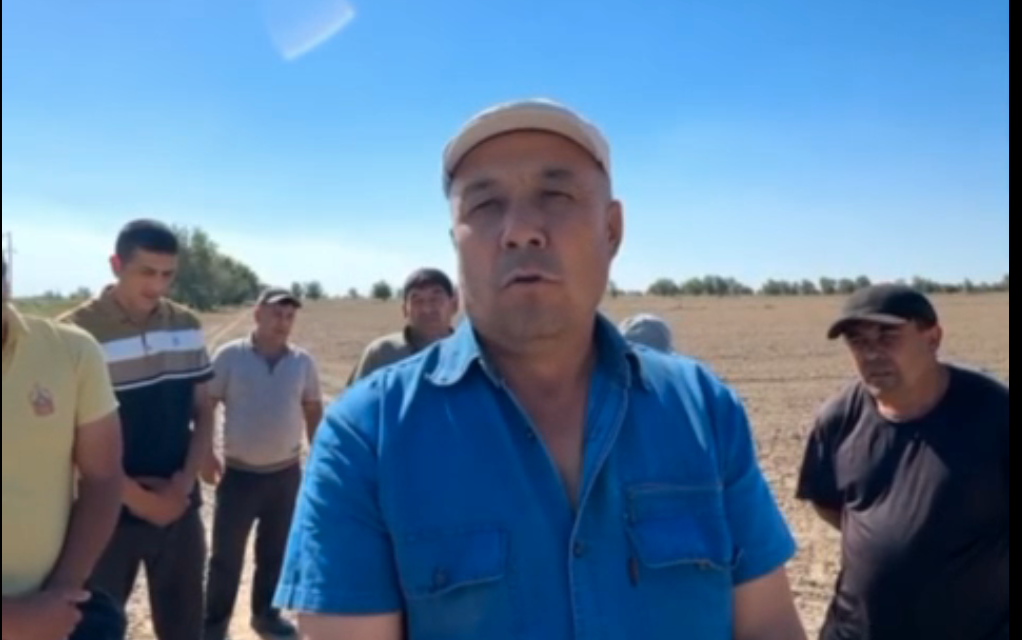
The allegations were made in a video appeal published on May 19, 2026 on a local Telegram channel. The appeal contains testimonies from dozen of farmers who claim that district officials ordered the destruction of wheat crops on hundreds of hectares of land under the pretext of planned investment projects involving Chinese companies. Farmers reported being told that the land would be transferred for cotton production using Chinese cultivation technology. According to the farmers, much of the land remained unused as of mid-May 2026 after crops were destroyed several months earlier.
Wheat Destroyed Before Harvest
Several farmers stated that they had legally obtained their land through state auctions and held valid 30-year lease agreements for cotton and wheat production. This year, they invested significant resources in cultivating wheat before local authorities intervened and demanded that the land be surrendered.
One farmer alleged that approximately 13 hectares of his wheat fields were destroyed on the orders of Navbahor district hokim Alisher Rashidov. “The wheat had been properly cultivated and was already growing well. Now they are destroying it under the orders of district officials. After forcing us to plant wheat, they are now ruining the harvest in order to hand the land over to Chinese investors.”
Video footage shows green wheat fields being destroyed and livestock grazing on cultivated land after plots were seized. According to statements in the video, nearly 300 hectares of wheat fields were destroyed. Farmers estimate the fields could have produced approximately 1,500 tons of grain if allowed to reach harvest.
Muhammad Gofforov, head of the “Qalqon Ota” farm, stated that he acquired 32 hectares of land through a public auction in 2023 for approximately 440 million UZS (approximately $36,500). He alleges that district authorities later seized the land despite a valid lease agreement. “In March they destroyed the wheat, saying the district hokim had ordered the land to be prepared for cotton. But even by May nothing had been planted. The land remains abandoned.”
Another farmer, Feruz Safarov, said district officials destroyed wheat cultivated on 3.5 hectares of land that he had leased through an auction for a 30-year term. “They destroyed the harvest on the orders of hokim Alisher Rashidov. To this day no cotton has been planted. The land is simply lying unused.”
Allegations of Pressure and Threats
Multiple farmers alleged that local officials, accompanied by law enforcement agents, pressured them to surrender their land. Farmer Husniddin Ahmedov stated that authorities demanded that he relinquish three hectares of cultivated land despite significant investments he had already made. “Officials began pressuring us on March 20. Then on April 21, they took the land. They came with policemen and said, ‘Whether you want to or not, you will hand it over.’”
Other farmers described similar experiences, claiming they were threatened with questioning and other forms of pressure if they refused to comply. Several interviewees stated that they had taken bank loans to finance agricultural production and now face mounting debts after losing access to their land and crops.
Questions About Investment Projects
Many farmers reported being told that the land would be transferred for investment projects involving Chinese companies. However, according to the testimonies, no visible investment activity has taken place on much of the seized land. Farmers repeatedly questioned why productive irrigated farmland full of crops was destroyed and left unused.
In May 2026, Uzbekistan adopted a presidential decree, “On Further Measures Aimed at Ensuring Agricultural Producers’ Autonomy in Land Use,” which restricts foreign investors’ access to agricultural land and limits such projects to unused, non-irrigated and pasture land. Under the decree, foreign investors may obtain land provided they invest in projects worth at least $10 million through specially established directorates under local administrations (hokimiyats), provided that the projects “utilize unused, non-irrigated, or pasture land”.
Minister of Justice Akbar Tashkulov confirmed to a local media outlet that from now on priority in the allocation of agricultural land would be given to the domestic labor market. “Given the limited availability of agricultural land, priority should be given to ensuring employment for the citizens of Uzbekistan. Therefore, a secondary lease mechanism is being introduced for foreign investors,” Tashkulov stated.
The farmer’s appeal from Navbahor district raises serious concerns regarding protection of farmers’ land-use rights and arbitrary terminations of agricultural leases. Such interventions put farmers at risk of losing their livelihoods the ability to repay agricultural loans. They also expose the lack of transparency in land allocation and investment projects as well as the use of pressure and intimidation by local officials. The reported destruction of nearly 300 hectares of wheat shortly before harvest also raises concerns about food production, efficient land use, and accountability for the resulting economic losses.
Uzbek Forum for Human Rights has documented numerous cases in recent years involving arbitrary termination of agricultural leases, unlawful interference in farming activities, and pressure on farmers by local authorities. The allegations emerging from Navbahor district reflect continuing concerns about the security of land tenure and the protection of rural livelihoods despite ongoing agricultural reforms in Uzbekistan.