 Citi News Room | 15 June 2025
Forestry Commission partners Rainforest Builder to restore degraded forest reserves
by Hafiz Tijani
Government’s Tree for Life initiative, which aims to restore degraded forest reserves across the country, is expected to receive a significant boost with the establishment of a nursery at Basengele in the Western North Region.
The facility, by Rainforest Builder, a forest restoration company, has a production capacity of five (5) million seedlings per year with a state-of-the-art irrigation system—making the nursery located at Basengele the largest native tree nursery in Africa.
Officials of Rainforest Builder say they will restore 2,000 hectares of degraded forest—double what they planted last year.
In just 18 months, the company has also restored more than 1,500 hectares of degraded forest across the Upper Wassaw, Anhwiaso South, and Anhwiaso East Forest Reserves.
Over 10,000 kg of seeds have been collected from native mother trees, 700,000 seedlings raised across 18 indigenous species, and 79 community meetings held.
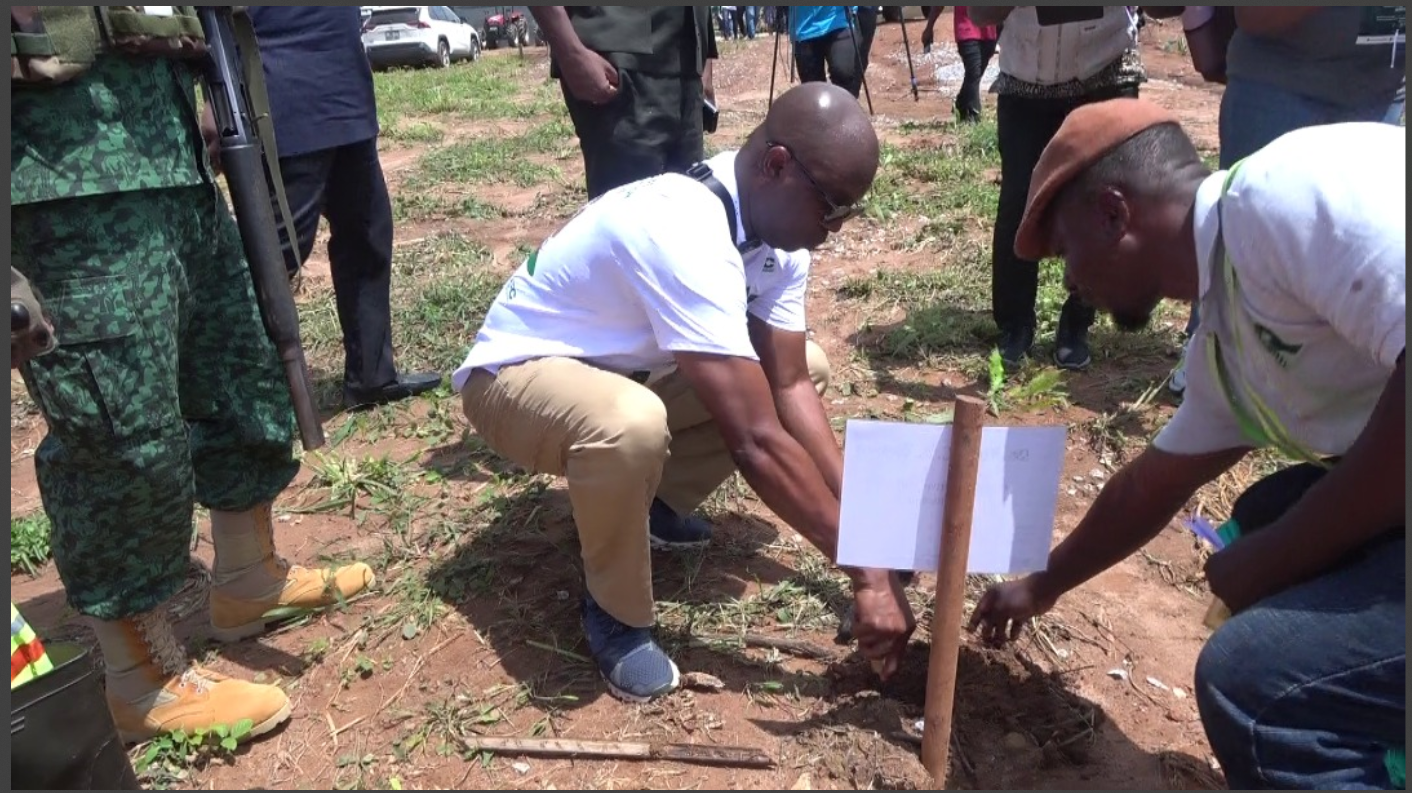
In June alone, Rainforest Builder is embarking on an exercise to restore 350 hectares, contributing to the government’s Tree for Life initiative—a national program championed by His Excellency, the President of Ghana.
General Manager of Rainforest Builder, Enver Mapanda, during a ceremony to unveil the nursery, disclosed:
“I am proud to announce that Rainforest Builder will also donate 10,000 seedlings to the Forestry Commission to support their own planting activities.”
She further said the nursery is not just about trees, as it reflects the company’s long-term commitment to restoring Ghana’s forest landscapes.
She added: “In partnership with the Forestry Commission—and aligned with the government’s bold vision for climate resilience, biodiversity restoration, and green jobs creation.”
To deliver on its vision, the company said it plans to employ over 900 workers—with more than half already enrolled—and to continue investing heavily in restoration and infrastructure.
She also pledged the company’s commitment to closely work with the District Office of the Forestry Commission, including through the pre-payment mechanism, to ensure there are available resources needed to actively support the Akwaaba Project.
The Forestry Commission has intensified monitoring of the Tree for Life initiative, which aims to restore degraded forest reserves across the country following illegal mining, logging, and bad farming practices.
The Commission emphasised its commitment to restoring affected forest reserves despite continuous attempts by some individuals to cause harm and damage to these areas.
Illegal mining and logging, as well as bad farming practices, continue to negatively impact major forest reserves across the country.
Most of these reserves have been depleted by the activities of illegal miners and loggers.
President John Dramani Mahama recently disclosed that the government has successfully removed illegal miners from eight out of nine forest reserves previously designated as no-go zones due to severe environmental degradation.
The Forestry Commission said the focus now is how to restore and reclaim these degraded forest reserves across the country.
Chief Executive Officer (CEO) of the Forestry Commission, Dr. Hugh Clement Adokwei Brown, revealed that most degraded forest reserves are being restored in the Ashanti, Western North, Oti, and other regions, following government’s partnerships with some private entities.
The Forestry Commission is hopeful that the establishment of a nursery at Basengele within the Bibiani Forest District—with a production capacity of five million seedlings per year—will support Ghana’s afforestation drive.