Thailand promises more rice for Bahrain
- Trade Arabia
- 03 June 2008
Bahrain is inviting private companies to set up joint ventures to invest in farmland in Thailand.




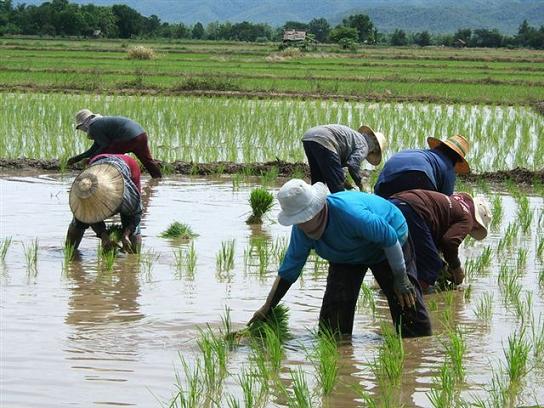
Bahrain is inviting private companies to set up joint ventures to invest in farmland in Thailand.
To break the runaway inflation that is fuelled by high food costs, Gulf rulers have a new strategy: they are buying unused agricultural land in poor countries like Pakistan, Thailand and Sudan, and becoming large-scale farmers.
Bahrain Minister of Industry and Commerce Dr. Hassan bin Abdullah Fakhro pointed out today that an agreement was reached with officials in the Philippines to allocate large plots of land to grow Basmati rice in a bid to secure the Kingdom's needs for such a product at reasonable prices
Gulf oil producers need to set up agricultural projects in fertile Arab countries to achieve self-sufficiency and to bridge a massive farm deficit that exceeded $12 billion (Dh44bn) in 2006, a Gulf group said yesterday.
Agriculture and Cooperatives Minister Somsak Prissananantakul is set to toughen the enforcement of land ownership laws to keep rice farming areas out of foreign investors' reach.
The Thai Farmers Association called on concerned agencies yesterday to look into land occupation by foreign businessmen, which has made many of the country's rice farmers landless.

In March 2004, an agreement was signed between southwest China's Chongqing Municipal government and the Lao government to cooperatively build a comprehensive agricultural park in Laos for Chinese enterprises to produce grain. Leasing farmland overseas to produce grain has become a new way for China, a country with the world's greatest population but comparatively scarce soil resources, to solve its food supply problem.
Farmers and activists have opposed a plan for a business consortium from Saudi Arabia to invest in rice farming in Thailand. The scheme is said to be the creation of former prime minister Thaksin Shinawatra. Farmers fear they could lose their livelihood and rice farming could be held hostage by foreign investors.

Egypt, Jordan and Kuwait are among the Arab countries who invest in agriculture in Suda. Also there are some private Saudi investors working in this field in the country.
Pakistan’s agriculture sector has the potential to cater to the food requirements of the GCC region, which spends over $200 billion on farm imports.
A British entrepreneur is leasing land from smallholders in an attempt to revive the breadbasket of the former Soviet Union
“Buying farms is not a bad thing,” Panos Konandreas, acting director of the UN Food and Agriculture Organization in Geneva, said in a telephone interview. “If you are like Saudi Arabia and have all the resources in the world, you can help farms optimize their strategies and there will be more production.”