Land grabbing – a killing blow to the fight against poverty in Africa
- APA
- 27 October 2010
Oxfam concerned that land grabbing not being addressed adequately and with enough of a sense of urgency.




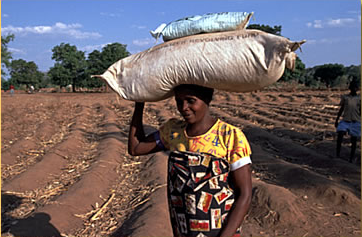
Oxfam concerned that land grabbing not being addressed adequately and with enough of a sense of urgency.

Farmland is a compelling way to capitalize on the coming bull market in agricultural commodities, but it’s a high-risk proposition.

“If we get money [from renting out our land] we can buy food anywhere. Then we can solve [Ethiopia's] food problem,” says Abera Deressa, minister of state for agriculture
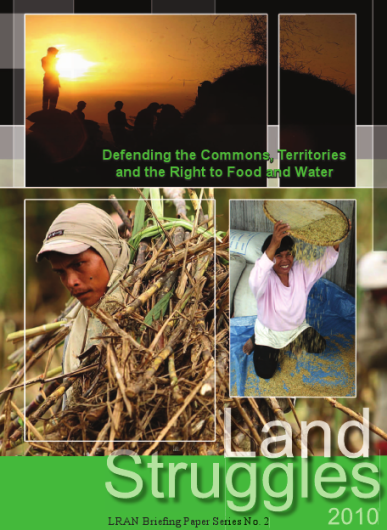
LRAN briefing paper series, October 2010

Report provides detailed information about investment opportunities in land grabbing offered to German private and institutional investors.
In lead up to Tunis Conference, African Development Bank calls for reforms to African land laws to facilitate private investment in agriculture.
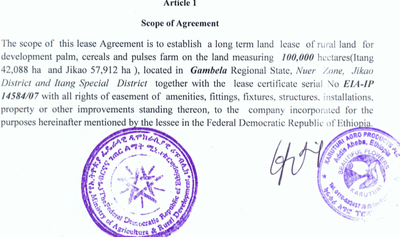
50yr lease agreement between Ethiopian government and India's Karuturi covering an initial 100,000 ha in Gambela. Contract enables Karuturi to extend concession by another 200,000 ha.

Interview with Elisha Kartini of the Indonesian Peasant Union

Río Negro's governor has signed off 320,000 ha to China's Beida Yuang for the production of soybean, wheat and rape, for shipment to China, over the next 20 years
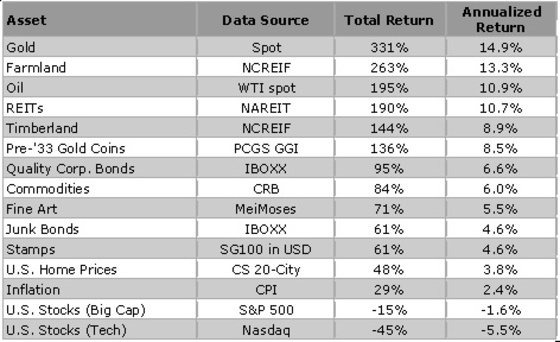
GAIA and others see the most leverage for investment returns coming from emerging market regions like Brazil, Russia, Ukraine and Kazakhstan due to low valuations, low costs of production and low land values.

“I got in on the ground floor, others got in on the second floor, but there’s a lot of floors left to go in Africa’s economic cycle,” says farmland investor Sai Karuturi.

A growing number of Chinese businessmen are looking at California vineyards for sale, to sell US wines to the booming China and Hong Kong markets.