

China’s shrinking farmland
- Perspectives
- 26 June 2009
Latin America is surely one of the most attractive places for China to invest in arable land and food industries.
Greg Mason, from the Queensland Department of Primary Industries, says countries and regions facing 'peak water' like China, India and the Arab states are looking to solve food shortages by growing crops in places like the Ukraine and Australia.
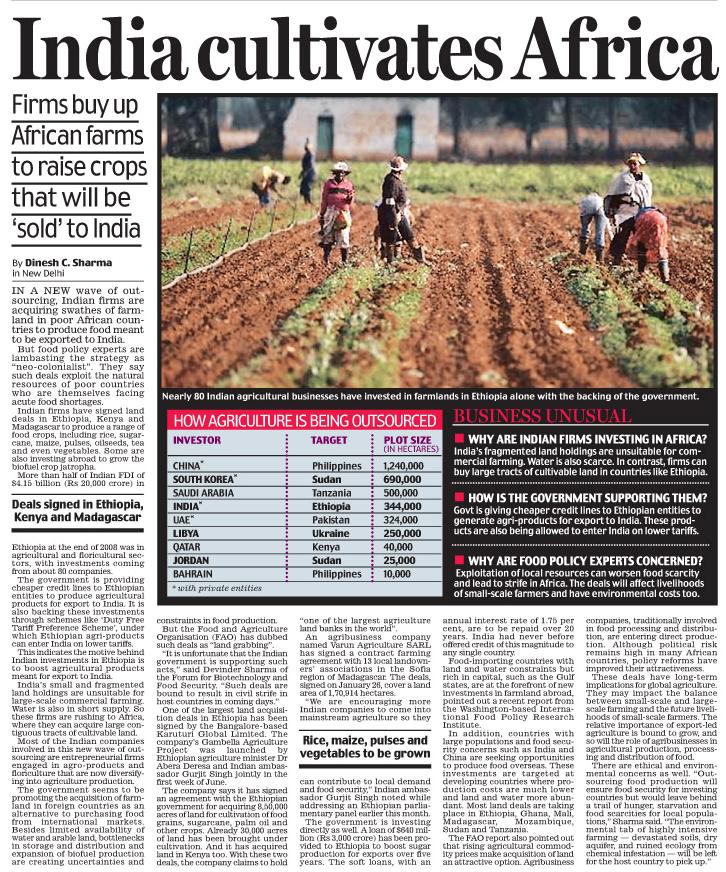
Indian firms have signed land deals in Ethiopia, Kenya and Madagascar to produce a range of food crops for export to India.
Amid fears of land-grabbing foreigners, Thailand's Democrat government is all set to give local landlords a big bonanza.
Despite criticism for Chinese efforts to acquire large-scale farmland in Africa, China is seen continuing to aggressively pursue acquisitions in other countries. says Michael Whitehead, executive director of the food and agribusiness research and advisory unit at Rabobank International.
KKR said that the company planned to build or acquire up to a further 30 large-scale farms over the next few years.
Sudan and China are expected to sign a number of joint projects in the agricultural field
Sam Pov, a rice farmer in Cambodia’s western Battambang Province, is very worried that his land will be taken over by a foreign investor.
As world population expands, the demand for arable land should soar. At least that's what George Soros, Lord Rothschild, and other investors believe.
African nations are becoming more cautious in selling farmland to foreign investors, with governments paying closer attention to deals that could lead to social unrest, AGRA says
Au delà de sa boulimie pour les matières premières du sous-sol africain, la Chine a aussi commencé à s’intéresser à l’agriculture africaine.
High on Chongqing's shopping list is more than 333,000 hectares of farmland, which Huang said would reduce the city's dependence, for example, on imported edible oil.