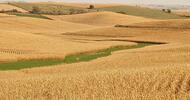
Both public and private sector investors in the Gulf are also looking at ways to improve local food supplies, by investing in a range of outlets from arable farm land in the Sudan, Algeria and Pakistan to introduce new technology to enhance the local production of foodstuffs and grains, livestock, poultry and fish.
- The Middle East
-
01 July 2008
Globalisation has taken yet another twist with some Middle Eastern countries deciding to grow their crops in other countries.
The Dubai-based think-tank Gulf Research Centre, in its food inflation report released last month, noted that agriculture production in the six-member Gulf Cooperation Council’s (GCC) countries is on the decline, and its exposure to unstable global food supplies would increase in the future. It called on the GCC to develop links with countries rich in arable land.
The UAE and its food-importing neighbours are “particularly vulnerable” to spiralling costs and should make significant investments in “contract farming” in Africa and Asia, says the UN’s Gulf food chief, Dr Kayan Jaff.
- The National
-
21 June 2008
The Arabian Peninsula is currently flooded with petrodollars, giving the Gulf Arabs a wide array of investment options abroad. But while these countries are winners in the oil market, they are losers in the food market. As a result, the Gulf Arabs - with Saudi Arabia at the fore - are pursuing a strategy to buy their food security through overseas agribusiness investment.
- Kuwait Times
-
18 June 2008
The Saudi government announced that it would co-ordinate with local private-sector companies and invest in strategic agricultural interests in key producer countries such as Brazil, Ukraine, Thailand and India, guaranteeing for itself supplies of cereals, meat and vegetables. It is already in advanced negotiations with Thai investors and a deal on rice farms in Thailand is likely before the end of the year.
- Economist Intelligence Unit
-
18 June 2008
Saudi Arabia has unveiled plans to develop large-scale overseas agricultural projects to secure food supplies, revealing that Riyadh is in discussions with Ukraine, Pakistan, Sudan, Turkey and Egypt.
- Financial Times
-
13 June 2008
The Government is considering the purchase of farmland worth US$500 million (Dh1.8 billion) in Pakistan as part of a strategy to lower food import costs.
- The National
-
08 June 2008
To break the runaway inflation that is fuelled by high food costs, Gulf rulers have a new strategy: they are buying unused agricultural land in poor countries like Pakistan, Thailand and Sudan, and becoming large-scale farmers.
- Economic Times
-
02 June 2008
Pakistan’s agriculture sector has the potential to cater to the food requirements of the GCC region, which spends over $200 billion on farm imports.
- Pakistan Investment Division & Board of Investment Media Release
-
20 May 2008
Talks aimed at acquiring large agricultural plots of land in Pakistan were not expected to yield results any time soon, a senior Pakistani government official has said.
Dubai-based Abraaj Capital, one of the Middle East’s largest private equity companies, has been quietly buying farmland in Pakistan as part of plans by the United Arab Emirates to increase food security and to damp inflation.
- Financial Times
-
11 May 2008