

Saudi Arabia looks to foreign farmlands to feed itself
- Dawn
- 26 April 2009
The issue of food security is getting higher on Riyadh’s priority list.
The Federal Minister of Investment in Pakistan, Waqar Ahmed Khan, said this week that the government plans to sell or lease 1 million acres of farmland to foreign investors, primarily from Saudi Arabia and other Gulf countries. Although the news has yet to gain much coverage, if carried out it could punctuate growing unrest and frustration, given Pakistan’s limited amount of arable land and population of more than 170 million.
GCC countries' initiatives to safeguard food security by investing in agricultural projects abroad had stalled, illustrated by the Saudi Bin Laden Group's decision to postpone a planned $4.3-billion investment in Indonesian rice production.
Food-importing nations from South Korea to Saudi Arabia may step up purchases or leases of overseas farmland to lock in supplies amid concern prices may again surge. “We’re going to see more of this, especially from countries that are quite dependent on imports,” Brady Sidwell, head of advisory at Rabobank Groep NV’s Northeast Asia Food & Agribusiness Research and Advisory Group, said in a Bloomberg Television interview broadcast today.
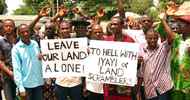
The issue of land ownership in Africa is very sacred and foreign investors need to be aware of the local sensitivities.
The problem of food security poses a real threat to global stability. Meeting in Italy last weekend, agriculture ministers of the G8 industrialized countries recognized the extent of the problem. They pledged to continue fighting hunger. But beyond calling for increased public and private investment in agriculture, the final communiqué of the ministerial meeting was short on fresh proposals.
Pakistan is offering one million acres of farmland, protected by a special security force, for lease or sale to countries seeking to secure their food supplies, an official from the ministry of finance said on Monday.
En janvier, le premier riz “saoudien” produit à l’étranger a été présenté au roi Abdallah. Le consommateur saoudien ne goûte pas la différence. En dépit du renversement de conjoncture, il continue à payer son alimentation à un prix élevé, correspondant au niveau en vigueur pour les achats massifs effectués en 2008 afin de prévenir toute crise alimentaire.
Saudi Arabian investors want to lease 500,000 hectares of farmland in Tanzania to grow rice and wheat.
Saudi investors have asked Tanzania if they can lease 500,000 hectares of farmland mainly for rice and wheat farming as part of a plan to secure food supplies for the desert kingdom, officials said.
Al Rajhi for International Investment will spend an estimated $400 million by 2011 to produce wheat and maize in Egypt and Sudan. The Saudi private firm is already farming 42,000 hectares of farmland in Egypt this year.
Saudi Arabia is putting $800m into a new public company that will invest in overseas agricultural projects. The move signals a large step-up in Riyadh’s efforts to outsource supply for the kingdom’s food needs.